
Rugged multi-bay chargers almost never have a list price. US contract awards, the federal supply catalog and a few distributors do publish what they cost, and the numbers are high. Here are ten of them, what drives them, what development costs, and what a custom charger built in Shenzhen costs instead.
Abstract
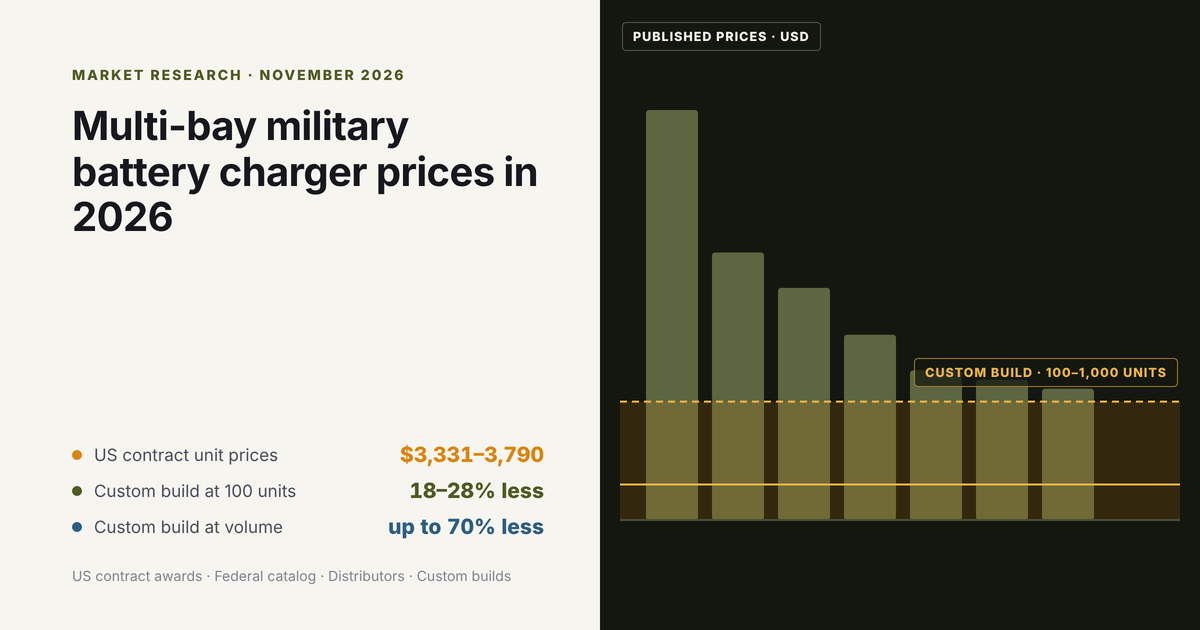
Ten published prices for multi-bay military battery chargers, from US contract awards, the federal supply catalog and distributors, run from $3,331 to about $32,300 a unit. The three contract awards that disclose both quantity and unit price paid $3,331 to $3,790 per charger in 2020 and 2021. Small volumes, contracts with a single bidder, qualification spread over a few hundred units and US manufacturing costs explain most of the gap to the cost of the parts; the makers' own margins are modest. A custom four-bay charger built in Shenzhen on the platform I describe elsewhere lands in the $2,500–3,000 band at 100 units, 18–28% below those contract prices, and in the $900–1,200 band from 1,000 units, up to 70% below. Development is a fixed price in two phases, and the first, which delivers three working engineering samples in 16 weeks, costs less than the $135,000 that a US Defense Logistics Agency program paid for a data package of an existing charger. The difference comes from the Shenzhen supply chain, certified modules instead of custom power stages, a fanless design with fewer parts, automated test and development priced at cost.
Why I looked at this
Anyone who needs a rugged multi-bay charger meets the same problem: nobody lists a price. You describe the battery, wait for a quote, and have nothing to compare it with. US government purchasing is the exception. Contract awards, the federal logistics catalog and the distributors that resell to it put real numbers in public, with dates and quantities.
I collected those numbers while pricing a four-bay vehicle charger, and kept the ones for military chargers that charge several batteries. This note sets them side by side with what the same class of charger costs to develop and build in Shenzhen. Every number below is as of November 2026, and money is in US dollars.
Results at a glance
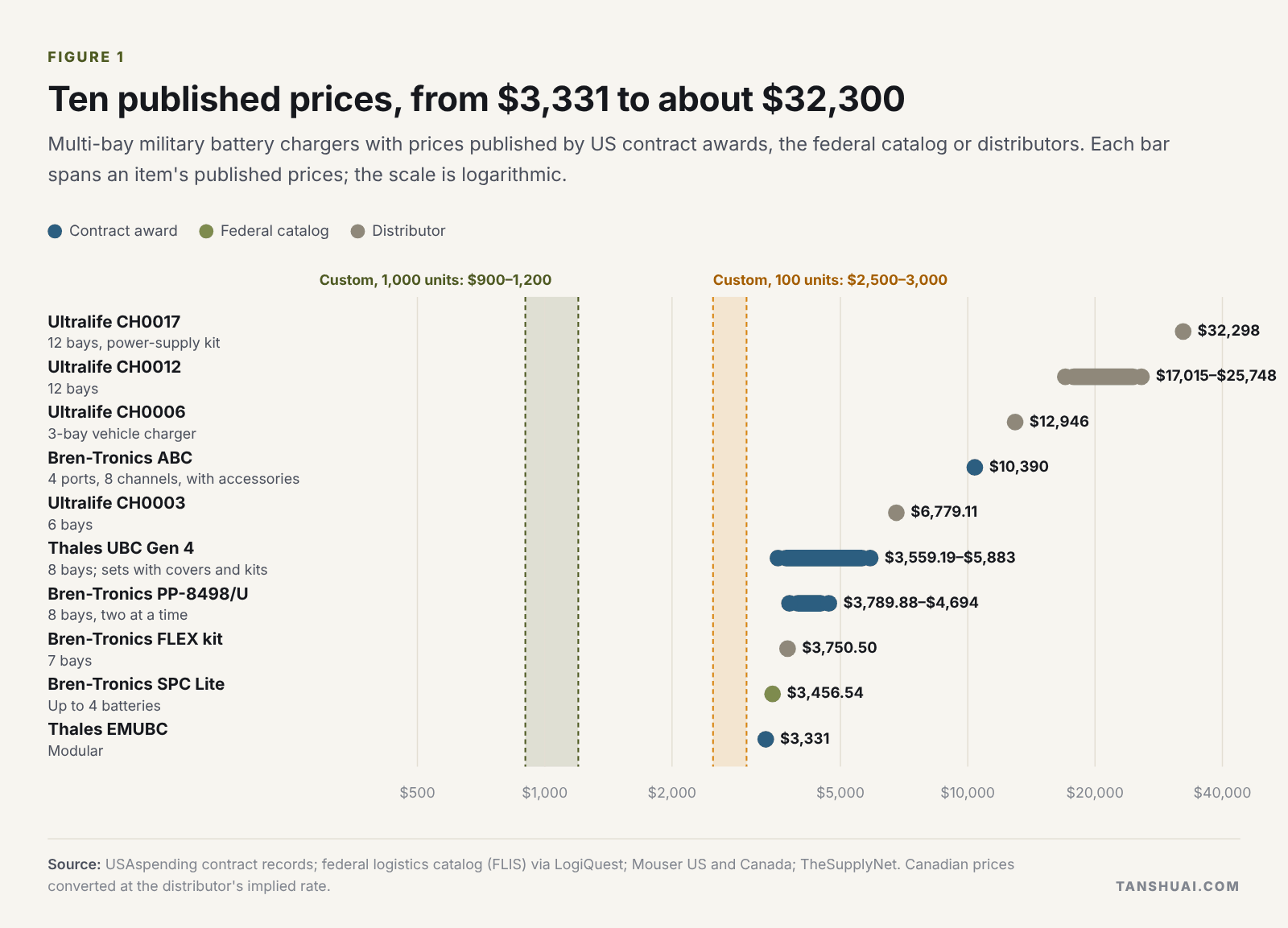 Figure 1. Ten published prices from $3,331 to about $32,300, against a custom build at 100 and 1,000 units.
| Charger | Bays | Published price | Basis |
|---|---|---|---|
| Ultralife CH0017, with power-supply kit | 12 | ≈$32,298 | Distributor list price, Canada, converted |
| Ultralife CH0012 | 12 | $17,015–≈25,748 | Federal catalog (2017); distributor list, Canada |
| Ultralife CH0006, vehicle charger | 3 | ≈$12,946 | Distributor list price, Canada, converted |
| Bren-Tronics ABC (BTC-70100) | 4 ports, 8 channels | ≈$10,390 | US Air Force, 4 units with accessories, 2025 |
| Ultralife CH0003 (MRC-85A) | 6 | $6,779.11 | Distributor list price, US, November 2026 |
| Thales Universal Battery Charger, Gen 4 | 8 | $3,559.19–5,883 | US Army, 27 units, 2021; sets with covers and kits, 2018–19 |
| Bren-Tronics PP-8498/U (BTC-70801) | 8, two at a time | $3,789.88–4,694 | US Army, 2 units, 2020; federal catalog, October 2026 |
| Bren-Tronics FLEX kit (BTK-70911-13A) | 7 | $3,750.50 | Distributor price |
| Bren-Tronics SPC Lite (BTC-70819) | Up to 4 | $3,456.54 | Federal catalog, October 2026 |
| Thales EMUBC | Modular | $3,331 | US Air Force, 8 units, 2021 |
What the US government paid
Three awards disclose both the quantity and the unit price of a multi-bay charger, and they are the firmest anchors in the market. In March 2020 the US Army bought two PP-8498/U chargers through a reseller for $7,579.76, or $3,789.88 each. In June 2021 it bought 27 Thales Universal Battery Chargers with their battery interfaces for $96,098.13, or $3,559.19 each. The same month the US Air Force bought eight Thales Expeditionary Modular Universal Battery Chargers for $26,648, or $3,331 each.
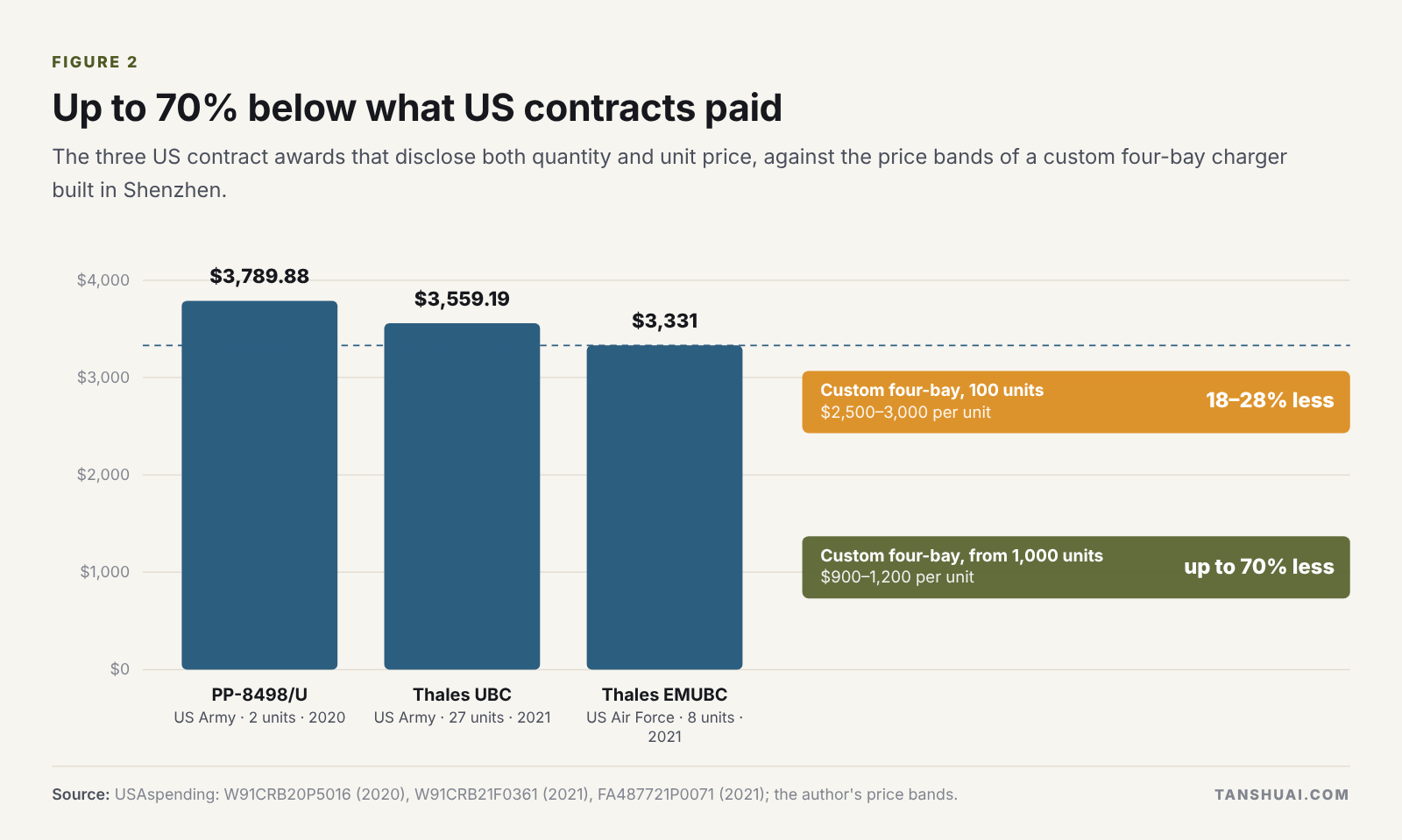 Figure 2. The three contract awards that disclose unit prices, and where a custom build lands.
Sets cost more. The Army's 2018 and 2019 orders of Thales chargers with soft and hard covers, accessory kits and cables work out at $4,818 to $5,883 per set. In July 2025 the US Air Force paid $41,558.10 for four Bren-Tronics Advanced Battery Chargers "and accompanying equipment", about $10,390 per charger with its accessories, under a sole-source award. The federal catalog, which sets the standard price at which the supply system sells an item to its users, lists the PP-8498/U at $4,694 and the SPC Lite at $3,456.54 from October 2026, both up from a year earlier. Distributors quote $6,779.11 for Ultralife's six-bay CH0003 in the United States, and the equivalent of about $12,900 to $32,300 for its three-bay vehicle charger and twelve-bay units in Canada.
Why the incumbents charge that much
The parts in a four-bay charger cost a few hundred dollars, so the gap is not in the parts. It comes from how this market buys:
- Small lots. Supply-agency solicitations for the SPC Lite, for example, asked for 12 to 65 units at a time between 2008 and 2018. Engineering, qualification and documentation are spread over a few hundred units in a product's life.
- Few bidders. Some of the largest awards had a single offer, including a five-year contract with a $15 million ceiling for two Bren-Tronics chargers. With no competitor, the price follows the incumbent's costs.
- US manufacturing and distribution. Units are built in small runs in the United States and often reach the buyer through a reseller, with factory lead times of 10 to 20 weeks.
- Modest margins. Ultralife reports a gross margin of about 24 to 25%. The prices reflect the cost structure of this way of building, not an outsized profit, which is exactly where a different way of building changes the answer.
What development costs
A custom charger needs development, and US agencies publish what they pay for that too. Under a small-business research contract, the Defense Logistics Agency paid $135,322.86 for a 12-month Phase I that reverse-engineered an existing six-bay radio charger into a source-approval package: a technical data package and test plans, but no new product. Phase II, at $368,147 over two years, covered that charger and a second, unrelated item. The agency reports that the redesigned charger saves up to 35% of the original item's cost.
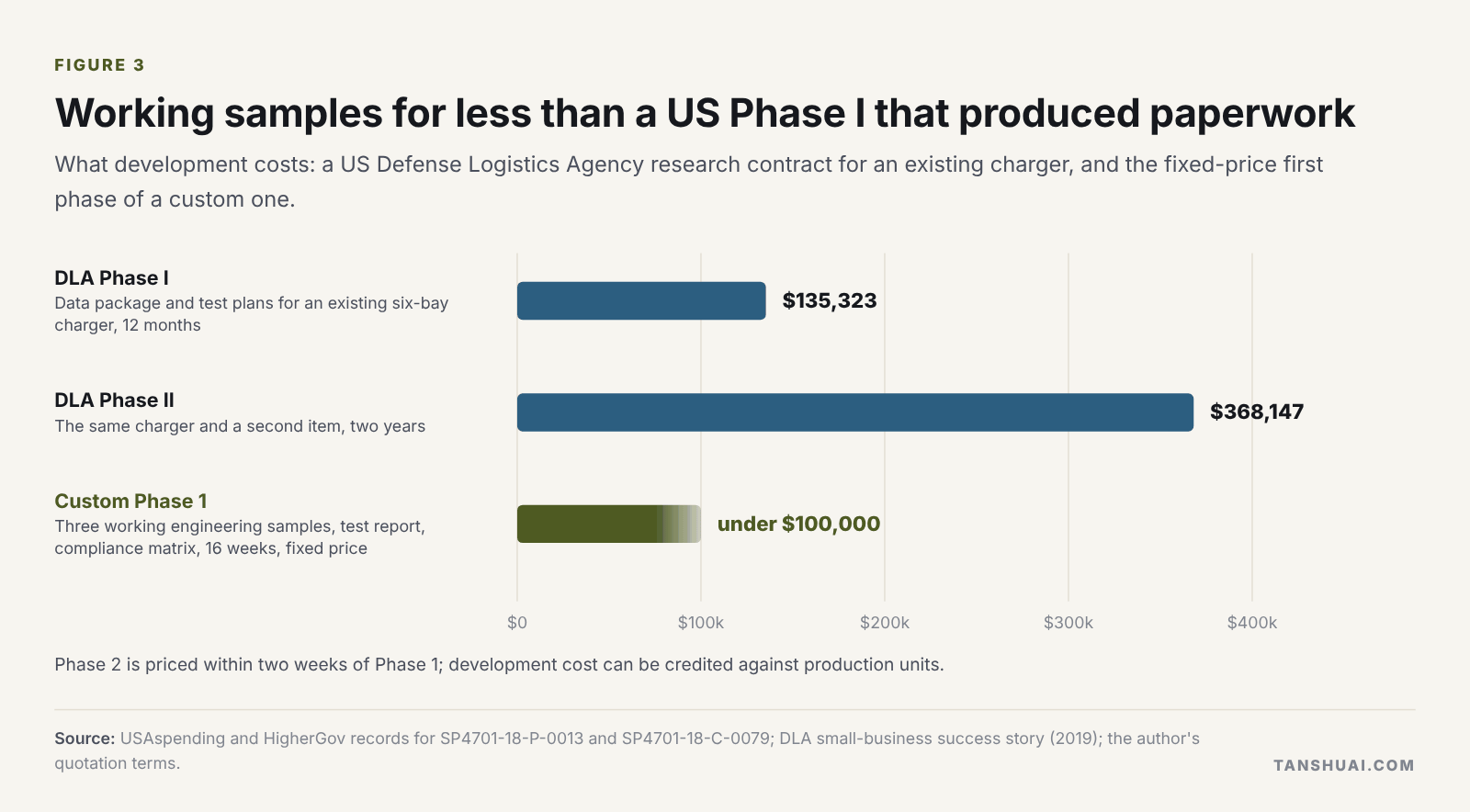 Figure 3. A fixed-price first phase with working samples costs less than a US Phase I that produced paperwork.
The platform's Phase 1 is a fixed price under $100,000. In 16 weeks it delivers three working engineering samples, a test report covering heat, the MIL-STD-1275 surge and an EMC pre-scan, and a compliance matrix that answers every line of the specification. Phase 2, priced within two weeks of Phase 1, freezes the design and prepares qualification; on payment, the complete design data package changes hands. Development cost can be credited back against production units. How the platform is built is in Custom Rugged Multi-Bay Battery Chargers in 2026.
What a custom charger costs, and why it costs less
A custom four-bay charger with AC and 24 V vehicle inputs, built in Shenzhen, lands in the $2,500–3,000 band at 100 units, 18–28% below the three contract prices, and in the $900–1,200 band from 1,000 units, up to 70% below them. The unit price falls by about 63% between those two volumes, as test fixtures, enclosure tooling and buying power take over.
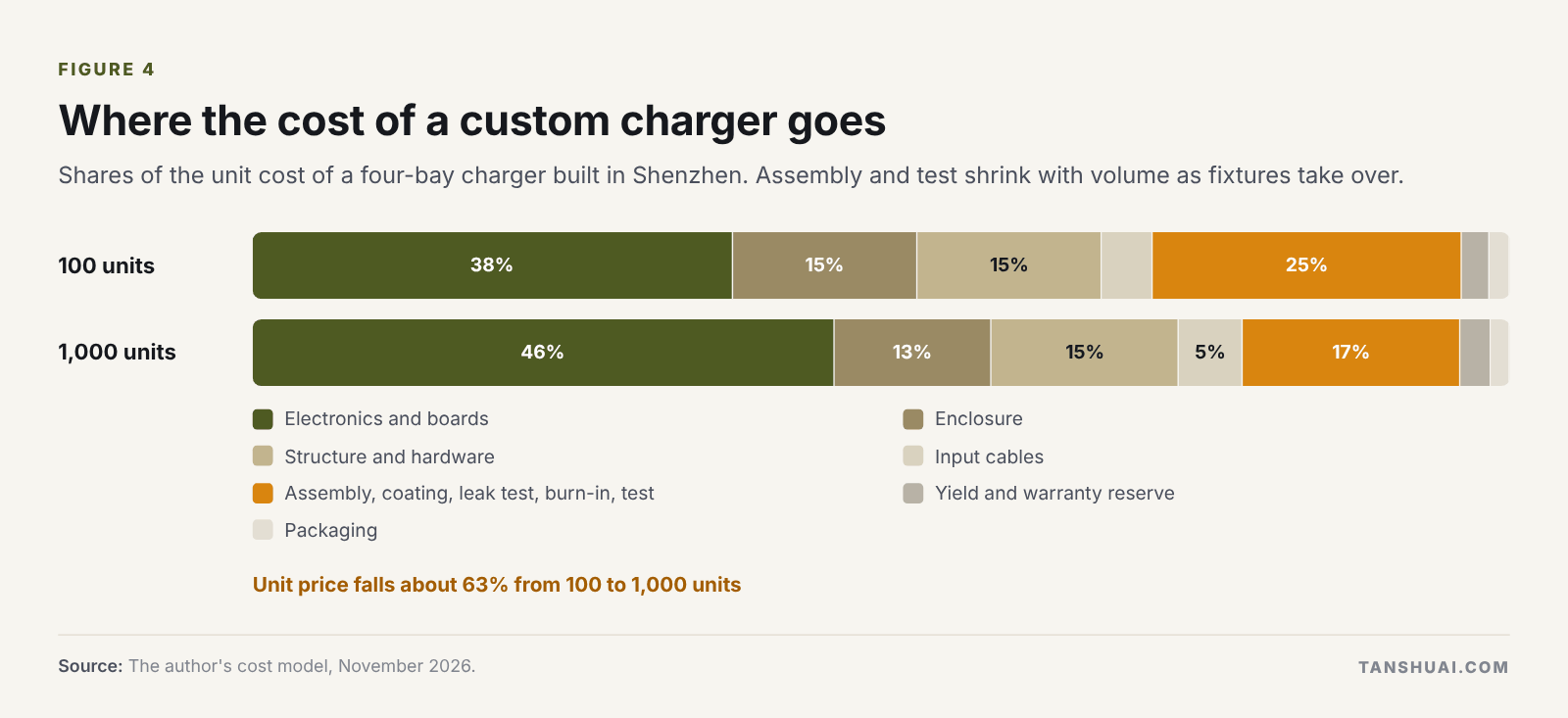 Figure 4. Where the cost goes: electronics first, then assembly and test, which automation shrinks with volume.
Five things make the difference:
- Shenzhen. BYD and Sunwoda have their headquarters in the city, EVE Energy and Desay Battery next door in Huizhou. Prototype boards come back in 24 hours, machined parts in about five working days, and almost every component is in stock somewhere in the city.
- Certified modules instead of custom power stages. Safety-certified AC-DC modules, isolated DC-DC modules and off-the-shelf charge controllers carry most of the EMI and safety risk, so development money goes into integration, firmware and mechanics.
- Fewer parts. A sealed, fanless case with one isolated channel per bay has no fan, no fan filter and no fan failures, and the same channel module repeats in every bay.
- Automated test. Assembly and test labor is the largest cost after the electronics at small volumes; test fixtures built during development make acceptance and burn-in largely automatic.
- Development at cost. A fixed price per phase, set from the engineering hours and parts it takes, credited against production.
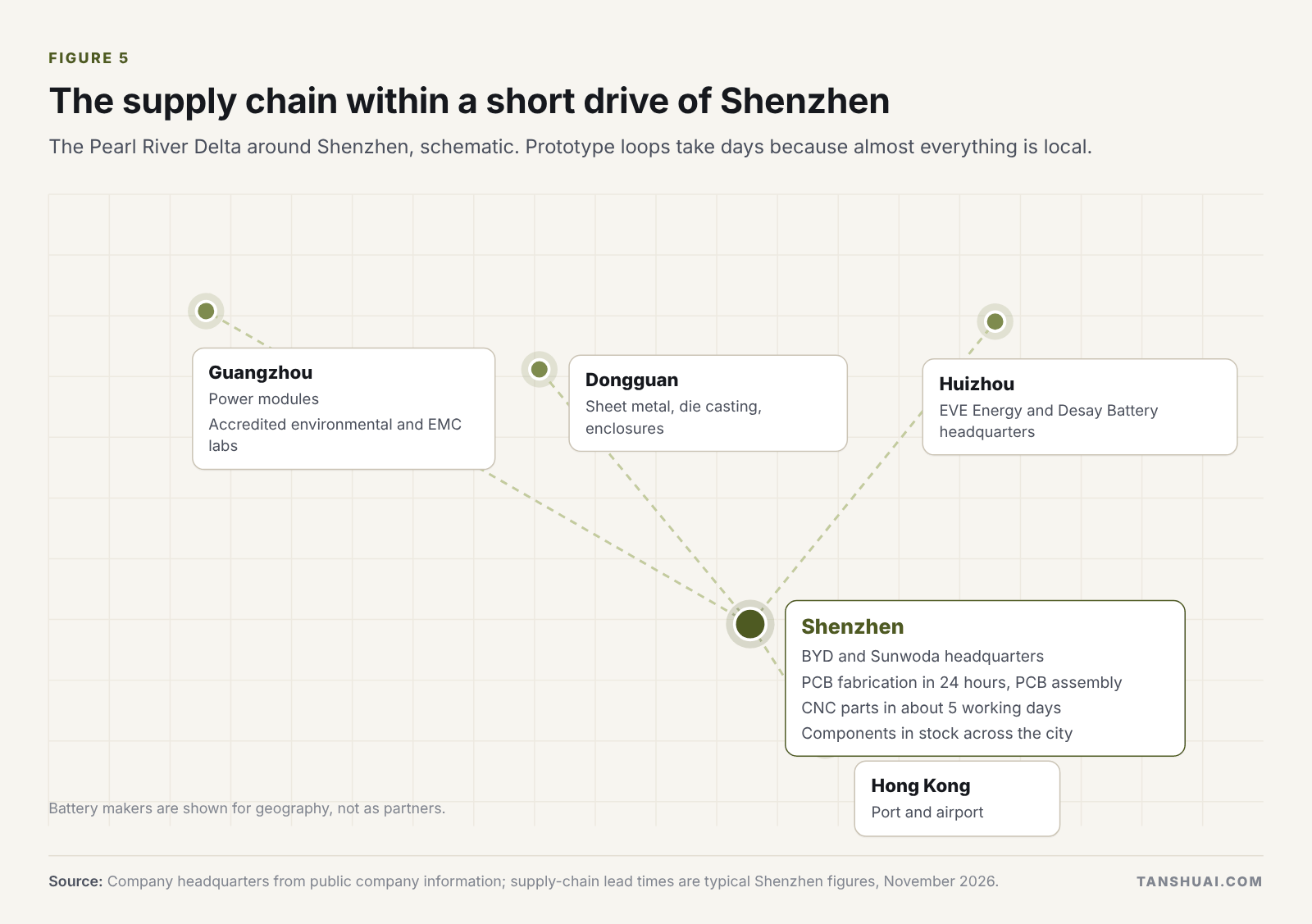 Figure 5. The supply chain within a short drive of Shenzhen.
How to read these numbers
A fair comparison needs three caveats. The chargers in the table are fielded and qualified, while a custom charger still has to be qualified; at published lab rates in mainland China that costs roughly $20,000 to $55,000, and my design checklist for MIL-STD-1275, 810 and 461 shows what goes into it. The configurations differ in bays, inputs and accessories, so the comparison is between classes of charger, not identical products. And published prices are snapshots: catalog prices change every October, and distributor prices whenever they like.
What the numbers do show is the shape of the market: a few incumbents, small lots, prices set by a high-cost way of building, and plenty of room for a different one.
Get a price for your charger
Send the battery's model or datasheet, the number of bays, the input power, the standards you need and the quantity to i@tanshuai.com. I reply with the questions that decide the design and, once the battery is clear, a fixed price for Phase 1 and unit prices at your volumes.
Download
- Multi-Bay Military Battery Charger Prices in 2026 (PDF), with all figures and every source.
About the author
Tan Shuai is a technologist and founder with more than twenty years of work across chips, hardware and system software, and 20 granted patents. His work has taken him through Silicon Valley, New York, Chicago, Taiwan, the Greater Bay Area (Shenzhen and Hong Kong), Vietnam and Malaysia, with a long focus on advanced manufacturing and supply chains. Today he works as an AI researcher and developer, and builds custom rugged electronics with manufacturing partners in Shenzhen.
Custom charger projects and technical discussion: i@tanshuai.com.