
AI review of AOI false calls pays back in months. A robot arm just to pick out bad boards never does. Here is what I found, with the full report and slides.
Abstract
Electronics factories are being sold two AI stories at once: vision that inspects boards, and robot arms that learn. I looked at both for SMT and PCBA lines in mainland China, Taiwan, Southeast Asia and the United States, using annual reports, standards, export rules, tariff schedules, benchmarks and price lists up to November 11, 2026. The part that works is narrow. About 97–99% of the alarms an AOI raises are false calls that a person confirms one by one, and supervised models trained on the AOI's own images cut that work by 60–90% by vendors' accounts; one large EMS company reports an 85% cut in its annual report. At RMB 50,000 per line, that pays back in five to eight months in the US, Taiwan and Shenzhen. Cobot arms that load and unload test stations pay back in a little over a year. A robot arm added only to pick out bad boards never pays back anywhere. General multimodal models are not inspectors yet: none of the 2026 flagships has a published score on an industrial-defect benchmark. They are useful as teachers that pre-label data for small local models. Air-gapped, on-premises deployment is practical. The retrofit market is real but small: about RMB 320 million in mainland China, spread over roughly five years.
Why I looked at this
This started with a question from a small hardware team I know. They build and assemble electronics, and they were weighing a move into AI inspection and robot arms for factories. Vendors told them one story, investors another, and every demo looked good. They wanted to know what a factory would actually pay for in 2026, what it costs to run inside a plant, and what is still a research project.
I have spent more than twenty years around chips, hardware and the factories that build them, so I offered to look. I read the annual reports and prospectuses of listed AOI, machine-vision, robot and EMS companies, the relevant standards and regulations, export-control classifications and tariff schedules, benchmark pages and papers, and public price lists. I also checked a set of claims from industry interviews against that record. Where the public record runs out, I say so.
Every number below is as of November 11, 2026. Money is in RMB at 6.7188 per US dollar unless I say otherwise. Most figures come from the full report, which you can download at the end.
Results at a glance
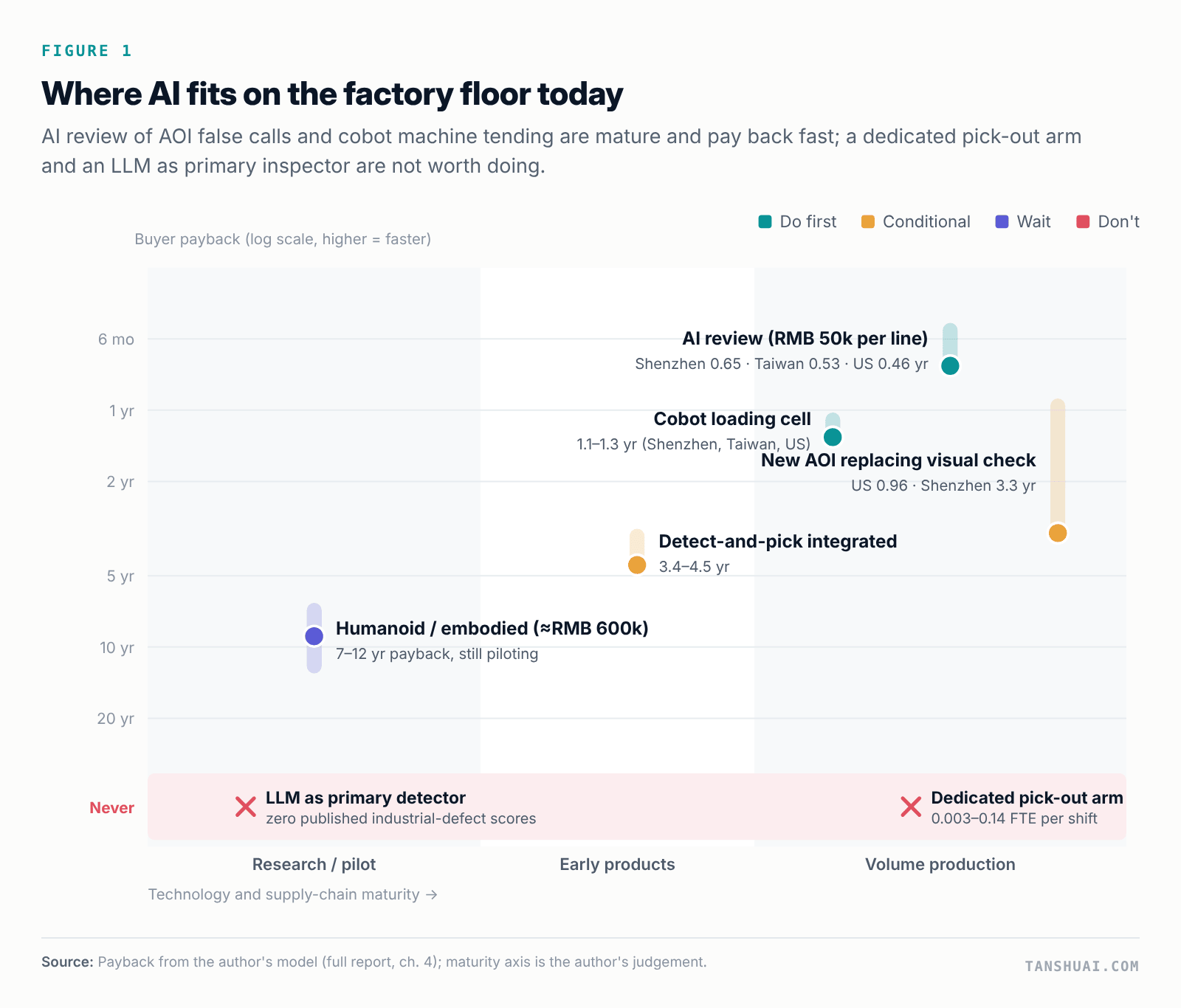 Figure 1. Where AI fits on the factory floor today. Higher is faster payback for the buyer.
| Use | Verdict | Key number |
|---|---|---|
| AI review of AOI false calls | Do now | Payback 0.46–0.65 years (US, Taiwan, Shenzhen) |
| Inspection the AOI covers poorly (hand soldering, coating, cables, final look) | Do now | Same buyers, less competition |
| Cobot loading and unloading of test stations and packing | Do | Payback 1.1–1.5 years |
| A new AOI to replace manual visual checks | Depends on wages | 0.96 years in the US, 3.3 in Shenzhen |
| Detect-and-pick in one integrated cell | Depends on volume | 3.4–4.5 years |
| Humanoid and other embodied robots | Wait | 7–12 years, still piloting |
| A robot arm just to pick out bad boards | Don't | Picking takes 0.003–0.14 of a person per shift |
| A multimodal LLM as the primary inspector | Don't | Zero published industrial-defect scores |
Where the people are on an SMT line
A volume SMT line is already highly automated. Boards go through paste printing, 3D solder paste inspection (SPI), placement, an optional AOI before reflow, reflow, AOI after reflow, X-ray (AXI) on a sample when there are BGAs, then in-circuit and functional test, visual inspection and packing. Takt is about 13–22 seconds per board, and a line usually has three to five AOIs. One laptop ODM budgeted RMB 30.6 million for AOIs across 18 lines.
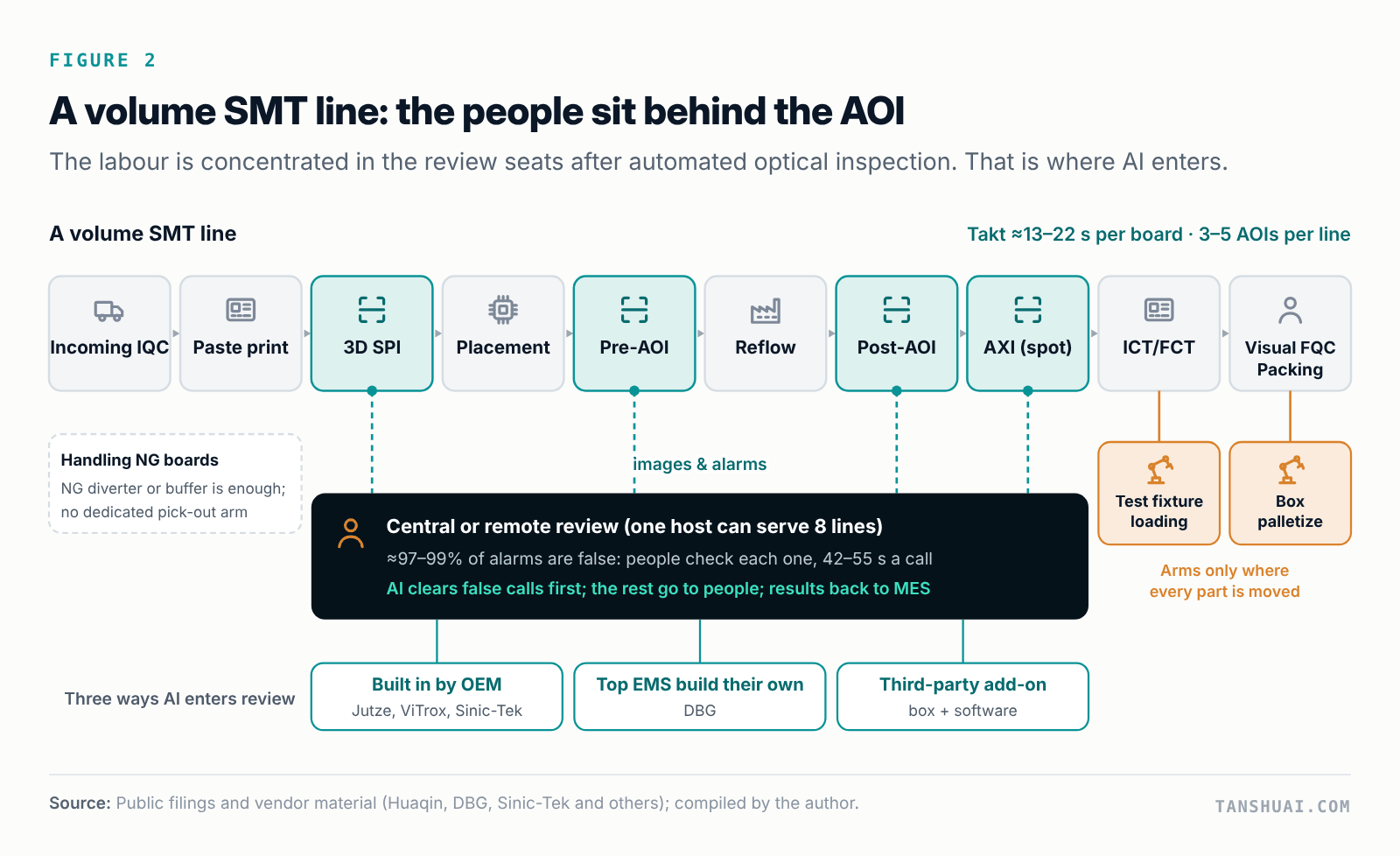 Figure 2. A volume SMT line. The people sit behind the AOIs.
The people are not on the conveyor. They sit behind the AOIs. An AOI is tuned never to miss a defect, so it flags far too much: across the cases I found, about 97–99% of its alarms are false calls on boards that are fine. A reviewer looks at each one, which takes 42–55 seconds. On a busy line that is about 448 false calls per shift, or 5.2–6.8 hours of one person's shift. The plant in that case staffed two reviewers per shift.
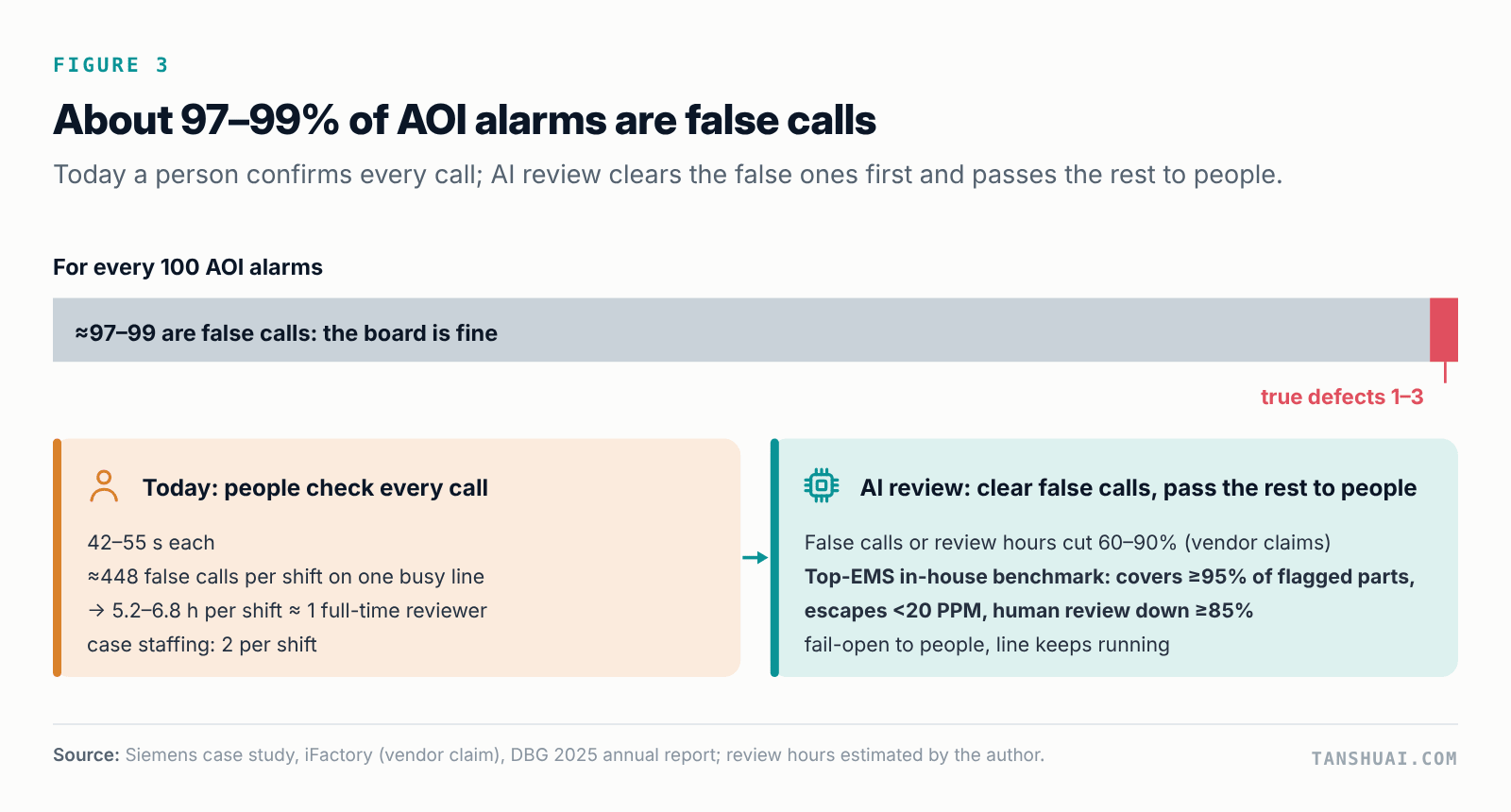 Figure 3. For every 100 AOI alarms, about 97–99 are false calls.
That review seat is where AI enters, and it enters three ways. AOI makers build it into new machines: Jutze says its AI 3D AOI "removes human review at inspection", ViTrox has launched an AI AOI, and Sinic-Tek is co-developing one with Tencent. The largest EMS companies build their own. And third parties bolt a box and software onto the AOIs a plant already has.
What works: AI review on the AOI's own images
The approach that works is not glamorous. A supervised model, trained on the crops the AOI already saves, sits right after the AOI and answers OK, NG or "ask a person". Vendors claim it cuts false calls or review hours by 60–90%. The best public evidence I found is in an EMS annual report: DBG's in-house system covers at least 95% of the parts its AOIs flag, keeps escapes under 20 PPM and has cut human review by at least 85%. If you want to sell into a tier-1 EMS, that is the bar you will be measured against.
Two details matter more than the model.
The first is the image. People often ask whether a good camera and a large model could replace the AOI. A general 4K camera looking at a whole 300 mm panel gets about 78 µm per pixel; an AOI works at 8–20 µm. At 78 µm, an 0402 resistor is about 13 by 6 pixels, enough to tell whether it is there but not whether its joints are good, and an 01005 is about 5 by 3 pixels, which is to say invisible. The AI works on the AOI's images. It does not replace the optics.
The second is what happens when it fails. The box must fail open: if it crashes or gets unsure, every call goes to a person and the line keeps running. A plant will not accept a box that can stop a line, and it should not accept one that can pass a bad board silently.
Multimodal models are teachers, not inspectors
The obvious question in 2026 is whether a frontier multimodal model can simply look at the board. Not yet. As of November 11, 2026, not one of the flagships released between September and November (GPT-6.x, Gemini 4, Claude Fable 5.2, Qwen3.8 and others) had a published score on MMAD, MVTec AD 2, VisA, Real-IAD or UniPCB, the benchmarks that test industrial defects.
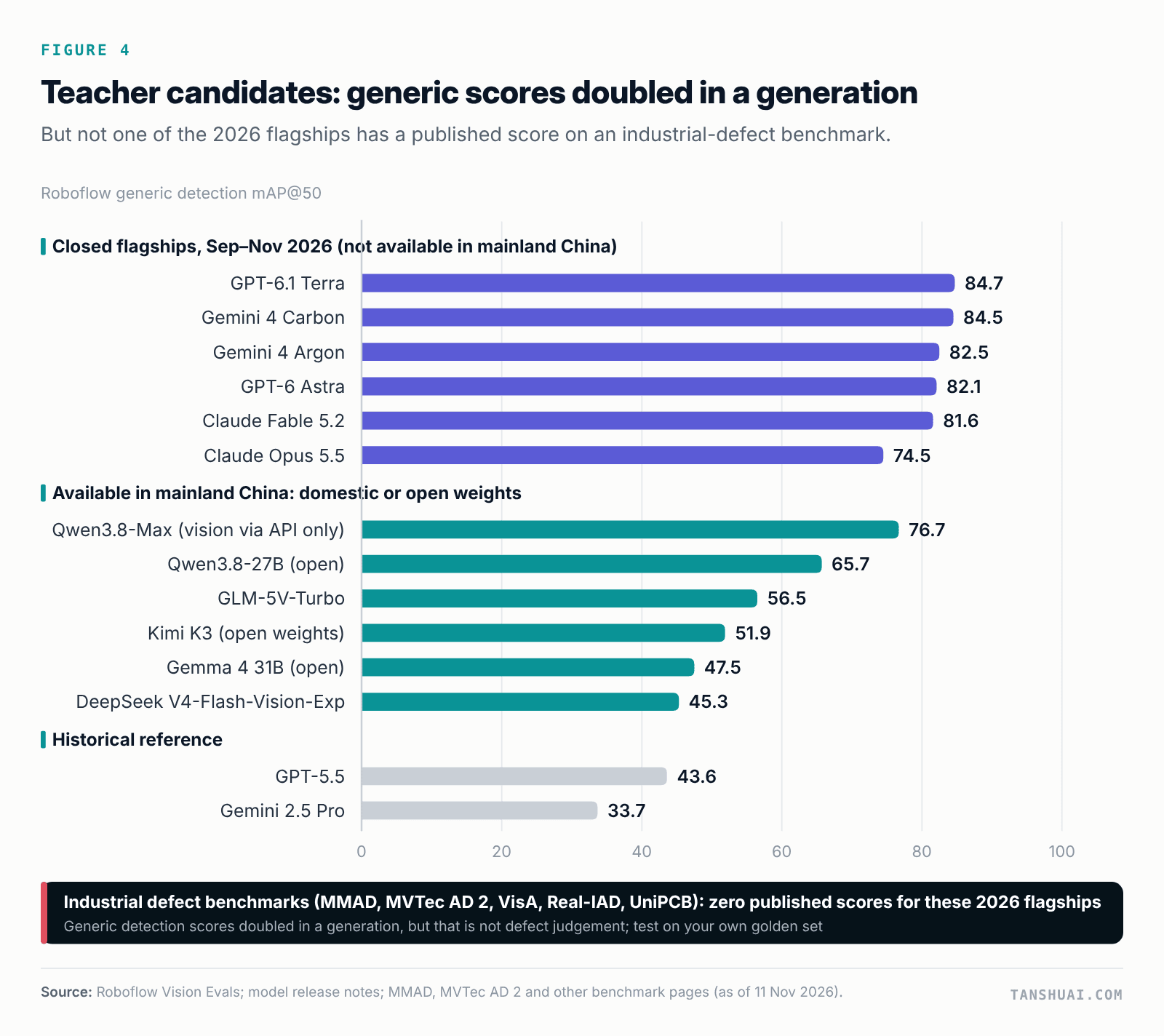 Figure 4. Generic detection scores doubled in a generation. Industrial-defect scores are missing.
Their generic detection scores did roughly double in a generation, but drawing a box around a person or a car is not the same as judging a solder joint. On MMAD, which asks "is there a defect?", human experts score 95.2 and the best general-model result I found is 83.1. In the ACM MM 2026 PCBA challenge, the top five systems, including one tuned on 6,600 real line images, scored 77–82 on defect-or-not, even though counting parts and reading attributes reached 95–100. Production needs 99% and more.
So I would use them as teachers. A frontier model pre-labels and triages new images, at roughly $23–196 per model per round. People adjudicate: two or three labellers work blind and a senior engineer decides. The labels go into a golden set, and a small 8-bit model is trained on them to run on the box at the line. It runs in shadow mode for two to four weeks, logging decisions but changing nothing, and goes live only after it passes the gates.
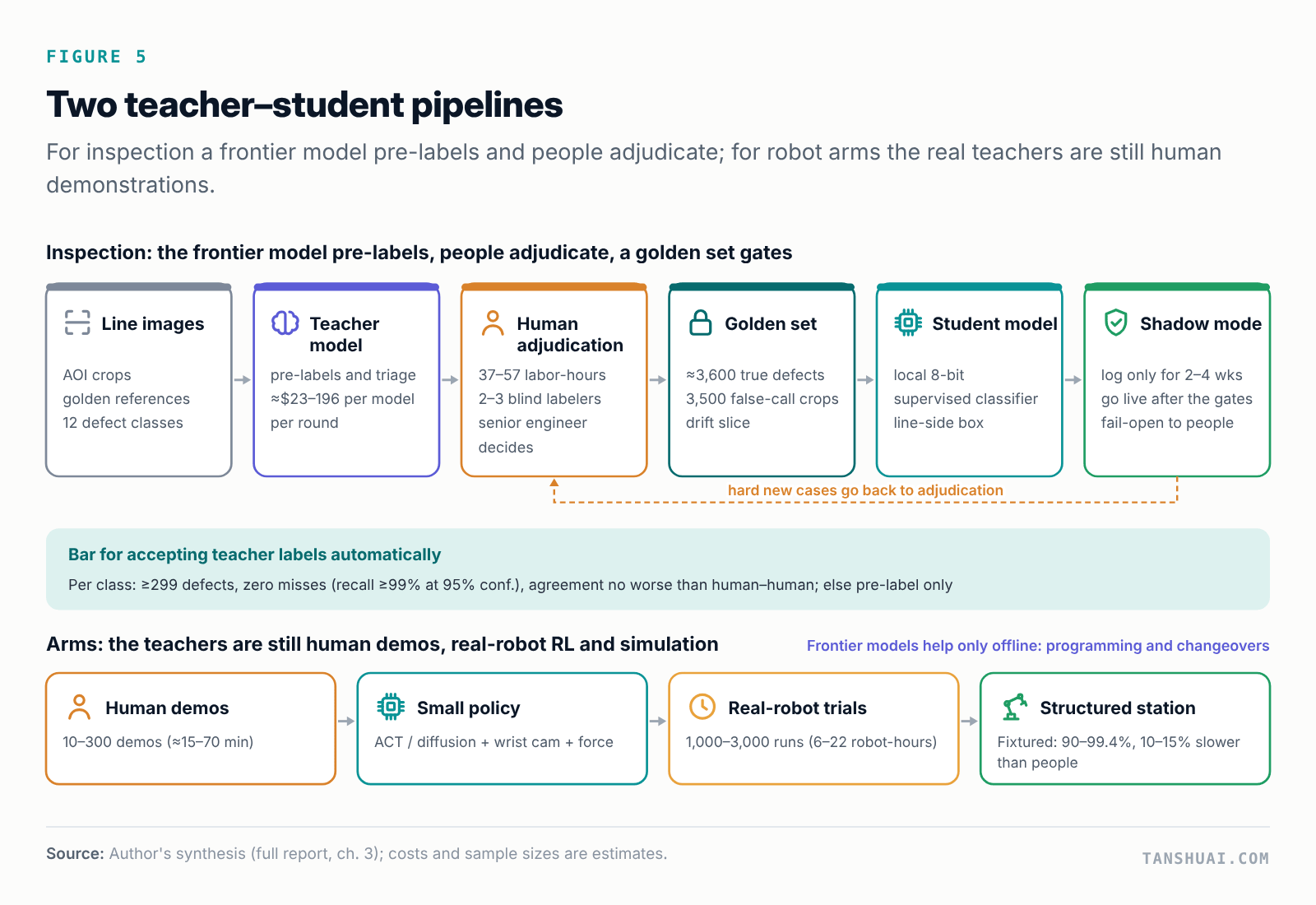 Figure 5. Two teacher–student pipelines. For arms, the teachers are still people.
The gate is the part most projects skip, and it is mostly arithmetic. To show 99% recall at 95% confidence with zero misses, you need 299 real defects of that class in the golden set. For 95% you need 59. For 99.9% you need 2,995, which no buyer can collect before a purchase. My rule: accept the teacher's labels automatically only for defect classes that clear 299 with zero misses, and only if the model agrees with the ground truth at least as well as two people agree with each other. For every other class, the teacher pre-labels and a person decides.
For robot arms the teachers are still people. A small policy learns from 10–300 human demonstrations, about 15–70 minutes of driving the arm, then improves with 1,000–3,000 real-robot trials, about 6–22 robot-hours. Frontier models help offline: they rewrite robot programs (77–99.7% correct on ABB RAPID tasks, checked in simulation before deployment), plan changeovers and explain faults. They don't sit in the control loop.
Running it inside the plant
Many electronics plants are air-gapped, and their customers' contracts often require it. That is less of a problem than it sounds, because the constraint is process, not compute.
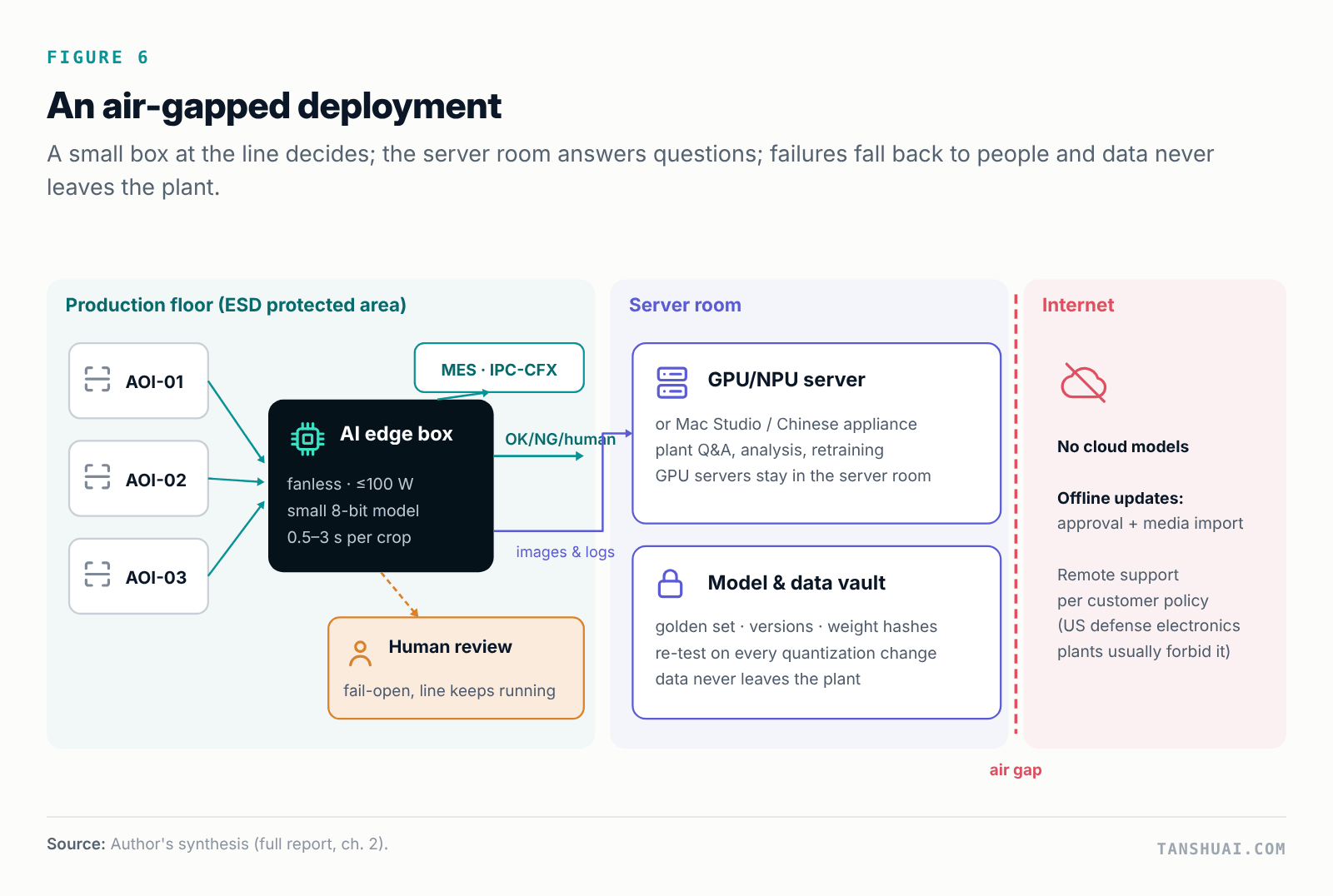 Figure 6. An air-gapped deployment. The box at the line decides; the server room answers questions.
An ordinary SMT hall is an ESD-protected area, roughly ISO 8 equivalent, not a graded clean room. A fanless, grounded box under 100 W next to the AOI handles inline decisions in 0.5–3 seconds per crop. GPU or NPU servers go in the server room, where they handle questions, analysis and retraining for the whole plant. Updates come in offline, by approval and media import. The golden set, model versions and weight hashes live in a vault, and data never leaves the plant.
Which hardware you can use depends first on where you are. In mainland China only domestic models or locally hosted open weights are available. Under NVIDIA's own export classifications, Jetson Thor and DGX Spark can be sold to an ordinary mainland factory without a US license, while DGX Station and the RTX PRO 6000 cannot. A Thor developer kit costs RMB 59,104 in China including tax and draws 40–130 W. A big workstation also does not make a good shared assistant: in independent tests, a DGX Station running a 743-billion-parameter model gave 32 users 139 tokens per second in total, about 4 each.
On precision, 8-bit is safe. Vendor quantization-aware 4-bit is usually fine for models of 70 billion parameters and up. At 3-bit and below, scores drop 7–15 points on average and 20–34 points on charts. The bigger risks are in the serving stack. In one study, with prefix caching on, 82.5% of repeated runs of a 4-bit model diverged, against 37.4% at 16-bit. In another, 7 of Ollama's 305 official code-model tags were essentially broken even though the files were intact, and none of 198 popular GGUF repositories recorded how their files were built. My rule is simple: re-run the golden set after any change of precision or inference engine.
What it costs, and what pays back
The business case comes down to wages. A fully loaded inspection or handling worker costs about $70,000 a year in the US, $19,600 in Taiwan, $12,700 in Shenzhen, $9,100 in Malaysia and $5,300 in Vietnam. The US is about 5.5 times Shenzhen.
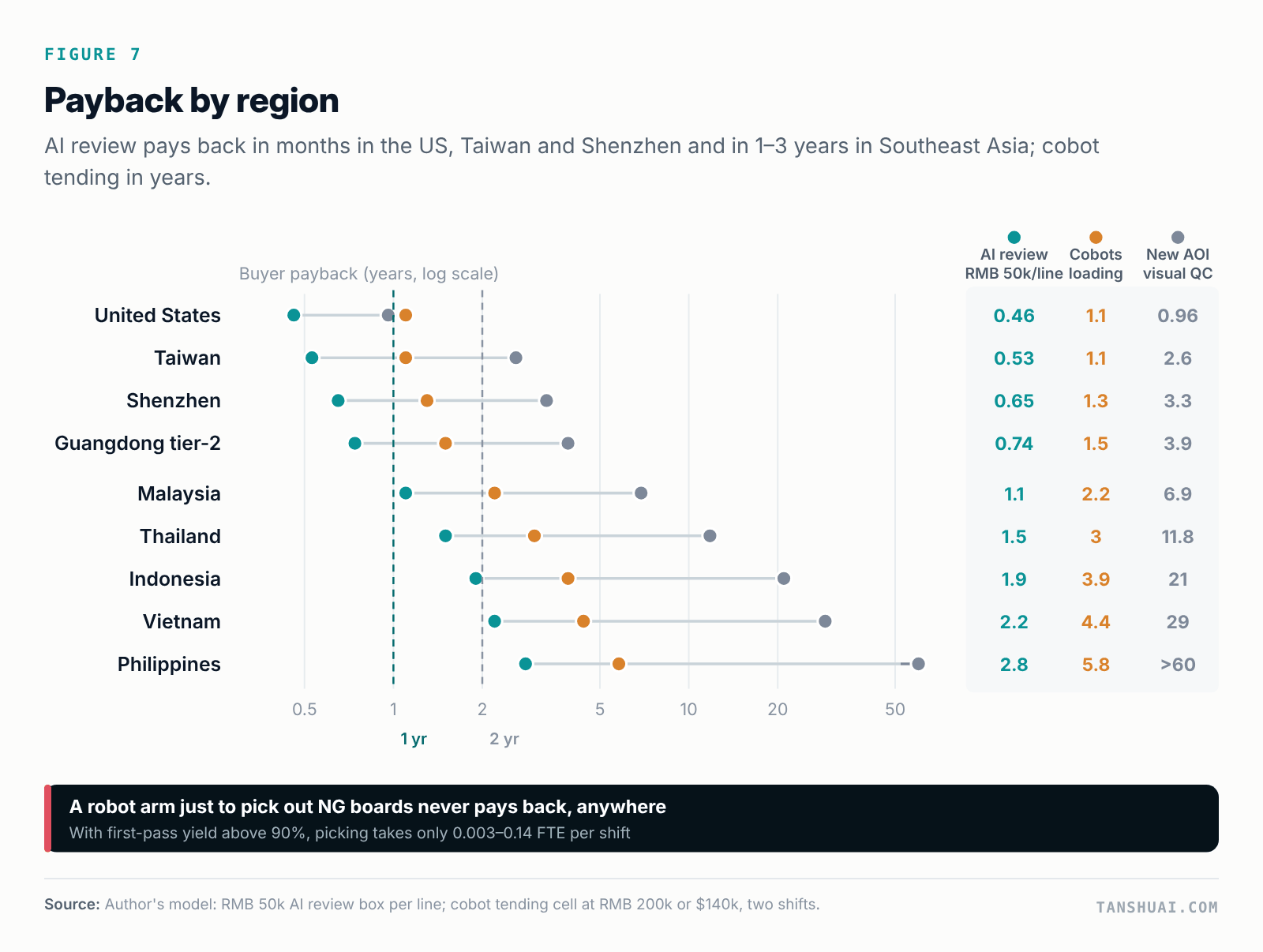 Figure 7. Payback by region for the buyer.
At RMB 50,000 per line, AI review pays back in 0.46 years in the US, 0.53 in Taiwan and 0.65 in Shenzhen, and in 1.1–2.8 years across Southeast Asia. A cobot cell that loads and unloads a test station over two shifts, at RMB 200,000 or $140,000, pays back in 1.1–1.3 years in the US, Taiwan and Shenzhen. A new AOI bought to replace manual visual checks pays back in under a year in the US but takes 3.3 years in Shenzhen.
What doesn't pay is a robot arm whose only job is to pull bad boards off an SMT line. Above 90% first-pass yield, picking takes between 2.5 and 100 minutes per shift, which is 0.003–0.14 of a person. An NG diverter or a buffer already does that job.
Two cautions on price. No third party publishes an RMB price for AI review; vendors quote case by case after a free trial. My best estimate of what a mid-size buyer in mainland China will pay a third party is RMB 10,000–30,000 per line one-off, or RMB 5,000–10,000 a year, so the RMB 50,000 in the payback model is an upper bound, not a list price. And for anyone selling into the US, where the hardware is made matters: robot arms made in mainland China pay about 40% in combined US duty, against 10–15% from Southeast Asia or Taiwan.
A real market, but a small one
Published sizes for "AI visual inspection" differ by more than ten times, because each firm counts something different, from cameras to testing services. None of them is useful for deciding whether to build a review product. So I counted from the bottom up.
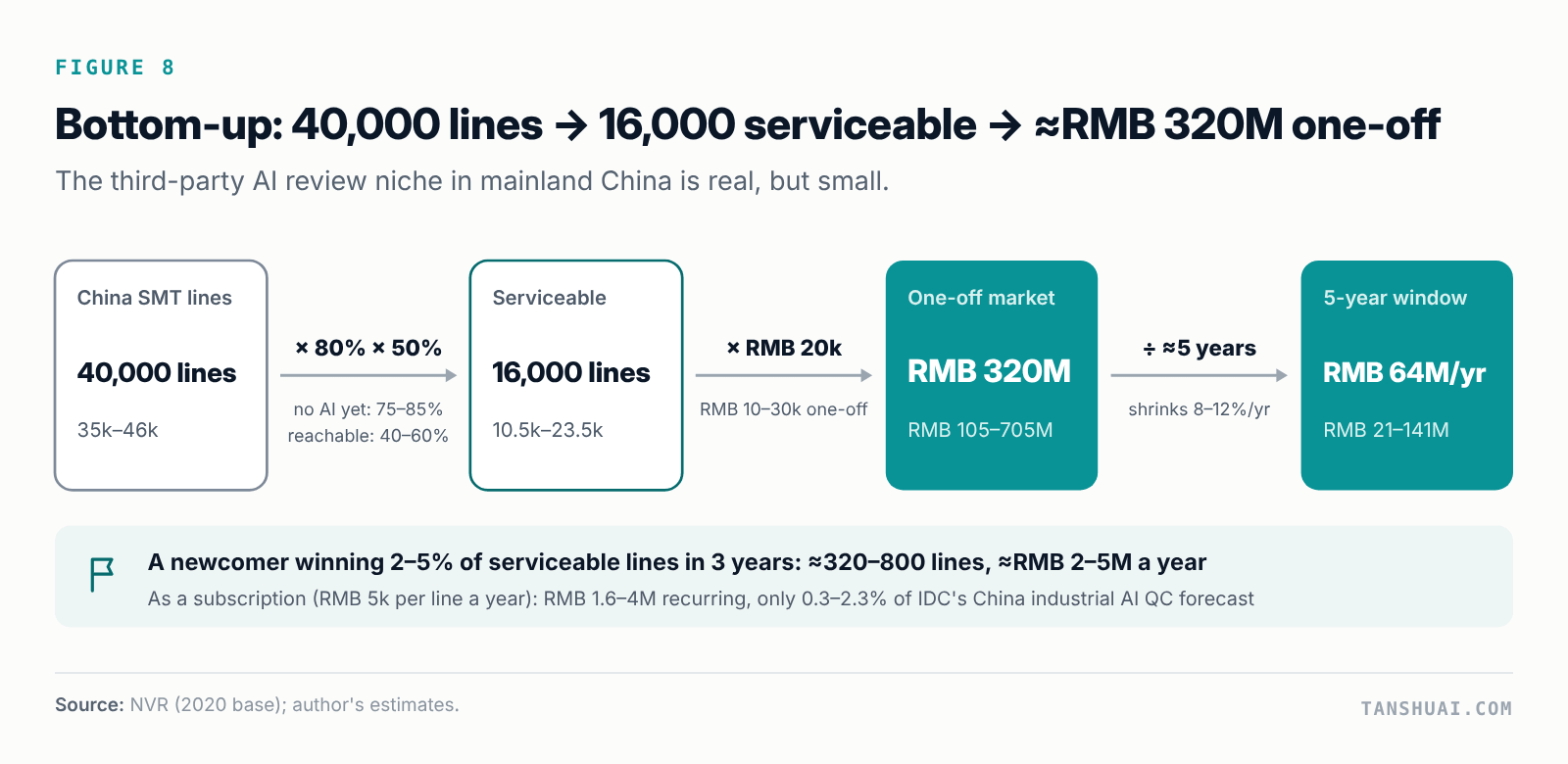 Figure 8. Bottom-up market for third-party AI review in mainland China.
Mainland China has about 40,000 SMT lines and roughly 44,000 inline AOIs without AI review. Take the share without AI and the share a third party can actually reach, and about 16,000 lines are serviceable. At RMB 20,000 per line, that is a one-off market of about RMB 320 million (range 105–705 million). The window lasts about five years, because AOI makers now ship AI in new machines and the installed base without it shrinks by 8–12% a year.
The wedge is also crowded. AOI makers are building review in, the largest EMS companies build their own, and platform vendors such as Hikvision and SmartMore are selling hard. One of the leading AI vision vendors reported 2025 revenue of RMB 1.086 billion and a net loss of RMB 991 million, after a price war. Margins sit with productized hardware: vision platforms and AOI makers earn 46–67% gross margin, while AI solution vendors earn 35–37% and lose money. Cash is slow, too. The usual terms are 30% at signing, 60% after acceptance and 10% held for a year, so full payment takes two to three years. Receivables run 51–99 days for standard products and 188–319 days for project-based equipment.
The room that is left is specific: mid-size EMS companies with 10–40 lines, older or mixed-brand AOIs and no AI upgrade from the AOI maker, plus the inspection AOIs cover poorly, such as through-hole and hand soldering, conformal coating, cables, connectors and FPCs, and final appearance and screws.
Robot arms and embodied AI
Learned robot control works today where the station is structured. With fixtures and a known part, small policies reach 90–99.4% success, at 10–15% slower than a person. Take the structure away and the numbers fall: 29–67% on connectors the policy hasn't seen, 37–59% picking off a moving conveyor, and 0–5.5% when a frontier language model drives the joints directly.
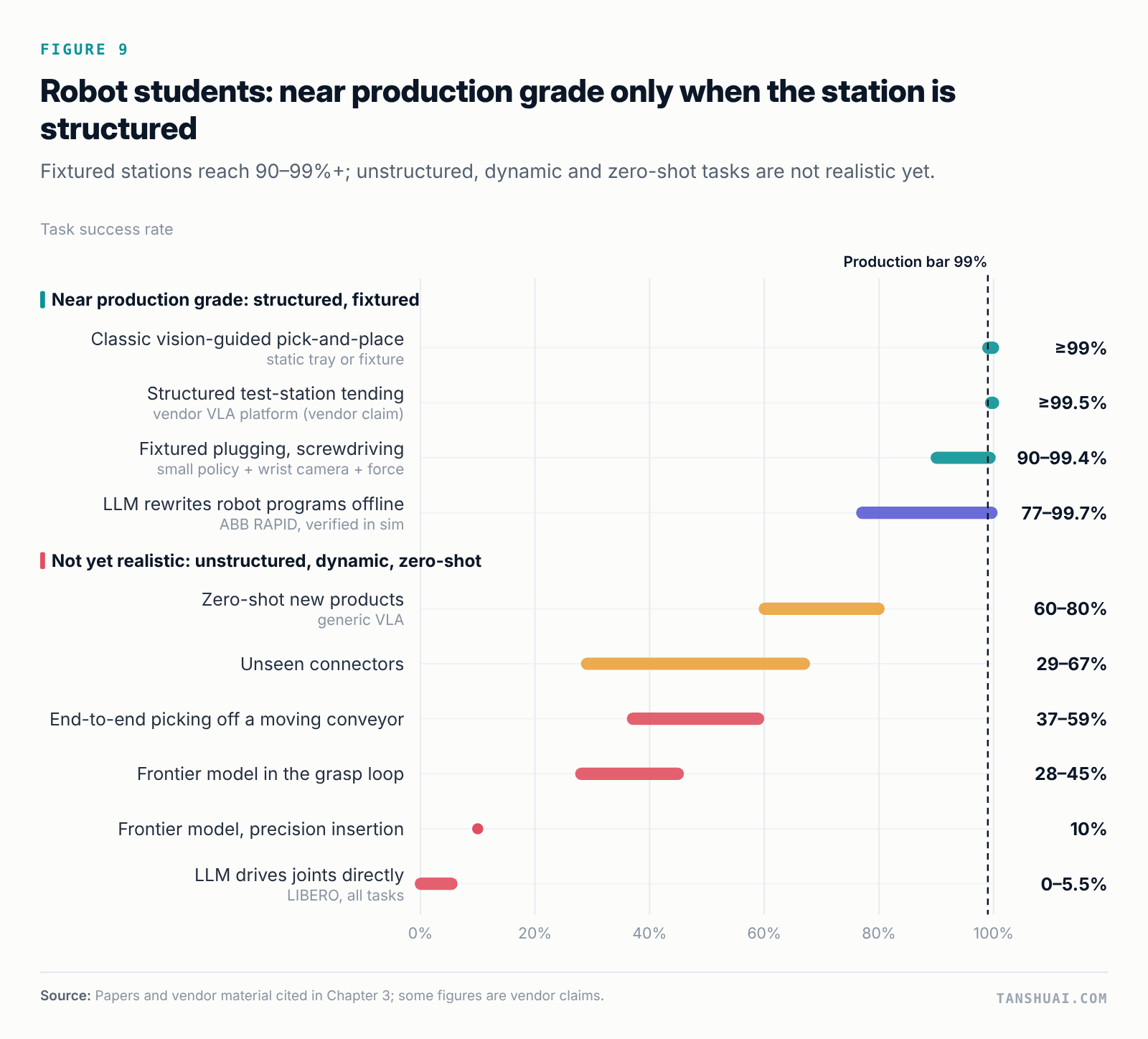 Figure 9. Robot students are near production grade only when the station is structured.
In-plant deployments disclose less than the headlines suggest. Of the factory deployments I tracked, most publish only how long or how much they ran. None publishes success rate, takt and intervention rate together, and some of the headline numbers are targets rather than results. When I turn the published numbers into labor actually replaced, the gap is large: a structured arm cell replaces about 0.82 of a worker per shift; a humanoid working at 40% of human speed, about 0.26; a humanoid that is teleoperated 40% of the time, about 0.05.
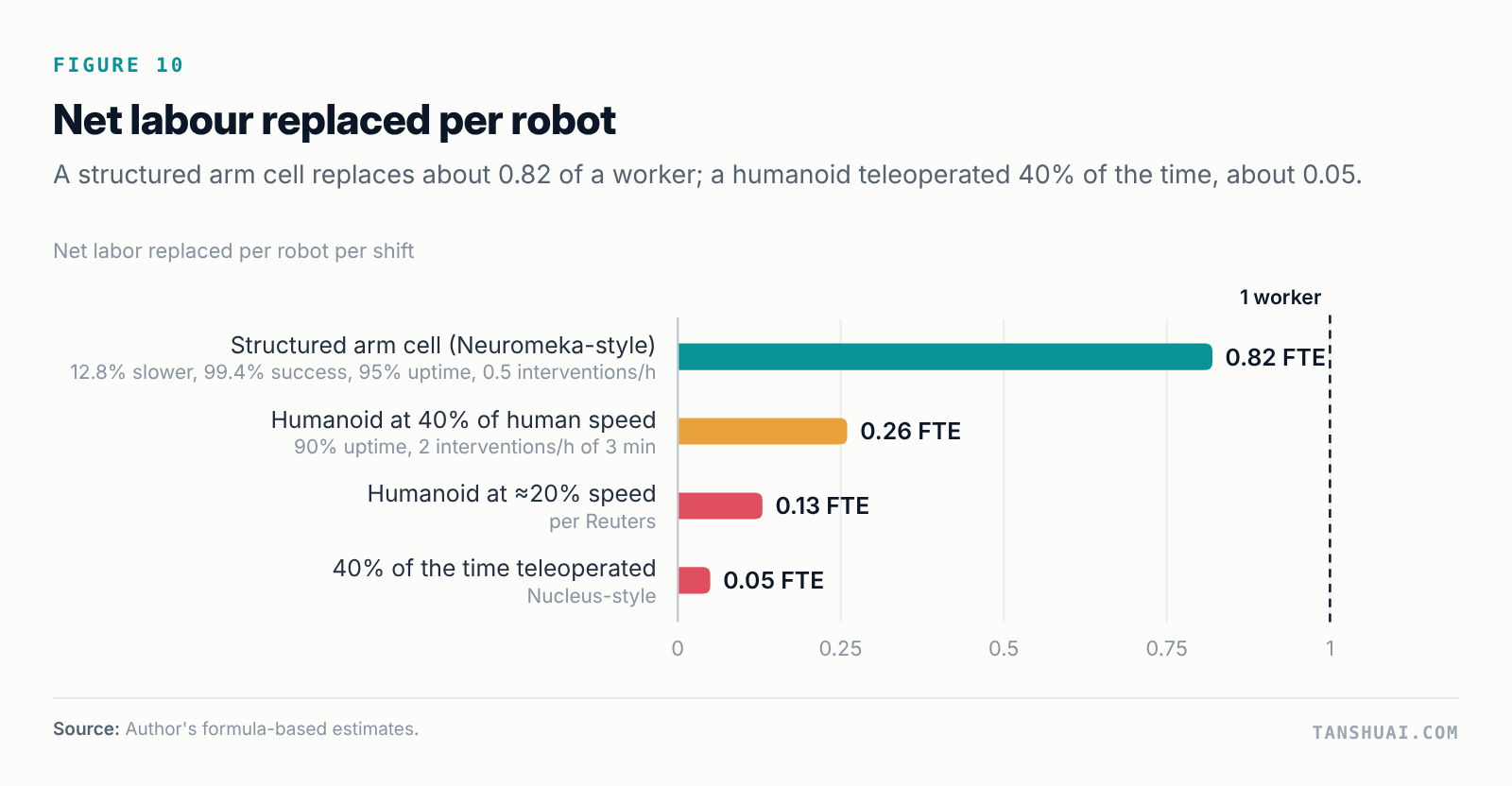 Figure 10. Net labor replaced per robot per shift.
The stack is settling into layers. Frontier models plan and write programs offline, on a scale of seconds to minutes. Small policies such as ACT, diffusion policies and small VLAs run in the cell with action chunks of 100–300 ms; by the vendor's numbers, a small ACT policy runs in about 50 ms on an edge board. Motion control stays with the robot controller at millisecond rates, and safety stays deterministic. The standards agree: under the EU Machinery Regulation, a safety function that uses machine learning needs a notified-body assessment from January 20, 2027, and the standards that would give AI a certification path inside safety functions are not expected to settle before 2027–2029.
For the next two years, then, I'd buy certified arms, put learned perception and small policies inside them, keep safety deterministic, and wait for production data from 2027 and 2028 before betting on humanoids.
What I would and wouldn't build
| Build | Don't build |
|---|---|
| AI review and defect classification on AOI images, for mid-size EMS with older or mixed-brand AOIs | A general "AI plus robot arm" platform |
| Inspection the AOI covers poorly: through-hole and hand soldering, conformal coating, cables, connectors and FPCs, final appearance and screws | A multimodal LLM as the primary inspector |
| Cobot cells for stations where every part is handled (test fixtures, trays, packing), with inspection as an add-on | A robot arm only to pick out NG boards; use a diverter or a buffer |
| A golden set and shadow mode on a real line before any claim | Humanoids or robots-as-a-service on an SMT line |
| Fanless edge boxes at the line, servers in the server room | Frontier models inside a control loop or a safety function |
The common thread is boring on purpose: pick a narrow task with a clear owner, measure it on the plant's own images, and let the plant's existing machines keep doing what they already do well.
What I couldn't verify
This is desk research. I didn't test any product on a line. Installed-base numbers and the share of AOIs already running AI are my estimates from public filings and market data, and the willingness-to-pay figures are estimates that only real quotes can confirm. Many robot numbers are vendor claims, and I've marked them as such in the report. Models, prices, tariffs and export rules change quickly; every figure here is as of November 11, 2026. The report lists the open questions and how a pilot would settle each one.
Downloads
- Full report (PDF): AI Visual Inspection and Robot Arms in Electronics Factories, 2026 Assessment, public edition, with all figures, tables and sources.
- Slides (PDF): the same findings in a short deck.
About the author
Tan Shuai is a technologist and founder with more than twenty years of work across chips, hardware and system software, and 20 granted patents. His work has taken him through Silicon Valley, New York, Chicago, Taiwan, the Greater Bay Area (Shenzhen and Hong Kong), Vietnam and Malaysia, with a long focus on advanced manufacturing and supply chains. Today he works as an AI researcher and developer, concentrating on how AI is actually used on the factory floor.
He welcomes conversations with people building in this space, whether assembling a team, looking for a partner or comparing notes: i@tanshuai.com.